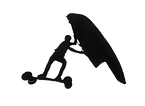
Inline wing Skating & Ski winging - Lausanne, Switzerland.
- WSMag

- Jan 26, 2024
- 3 min read
We had the pleasure of catching up with Vincent who has shared his story and experiences of Inline wing Skating & Ski winging.
Here's what he had to say along with some awesome video's of what he loves doing - enjoy!
"I'm Vincent, 52 years old, and I live in Lausanne, in the French speaking region of Switzerland.
My true passion is inline skating downhill, but also any kind of freeriding on skates, like in the city, or on SUV skates, or on short track ice skates.
And also, wind-powered skating or skiing. In reality, I began with kite-skating and kite-skiing in the early 2000's, with a few fellow riders already using wings (Skimbat) sometimes on snow or on a frozen lake. So when I saw the new generation of inflatable wings coming on the market, I wanted to try and bought an Ensis Score 4.0 in October 2021.
My goal with the wing is to have an easy alternative to my usual inline skating, when weather conditions aren't pleasant for skating, i.e. when there's a lot of wind. I go to spots near where I am living, like 15 minutes from home. I also took a wing on holiday (Decathlon low cost 2.5m wing) and it worked fine with a strong wind by the sea. For wingskating I could do it with any skates, but I prefer using skates with big wheels, up to 150mm. So I'm higher with the wing, and there's less risk that I destroy the wing on the road! For wingskiing, I'm using standard skis.
On the low-traffic country roads that I ride with my skates, I don't use a harness and ride unhooked, because I must react very quickly in case the windspeed changes suddenly, since the road is narrow. With skis in a field, I ride sometimes unhooked, but mostly hooked to a harness with a self made rope.
As previously mentioned, I only have one high tech wing, the Ensis Score 4.0, because it's an occasional activity. I choose the 4.0... because it was in stock! Ideally, I would have taken a 4.5 or a 5.0 or bigger, because wind isn't so strong here. But I also feared that a bigger wing would have been too big and have easily touched the ground, since I'm not tall (1,67m). For wing skating with this 4.0 and my 65 kg weight, I need at least 20km/h of wind. For wing skiing, I need 30 km/h.
My second passion is shooting and editing videos for YouTube and Instagram with the small amount of time I have to spread my passion for skating and freeriding. My enthusiasm grew constantly since the GoPro HD original in 2009. My 10th and last GoPro is a Hero8 black I am still using, for example on a tripod. And I am now using an Insta360 X3 mostly on me-mode to shoot on-board, with a harness and the telescopic 3m pole.
I can only motivate longboarders, skaters, inline skaters to try the wing, especially if they live near windy areas, because it's so much easier and safer than kites. Same for wing skiing, which could be really easy and safe in areas with snow and wind, like in big fields or on frozen lakes.
About wing competitions out of the water, I think we will soon see races on frozen lakes, like on lake Silvaplana near St-Moritz here in Switzerland where there are already each year kite-skiing races".
A massive thank you to Vincent for taking the time to share his experiences with us and providing a great insight into the world of Inline wing skating and Ski winging!
Check out his YouTube channel https://www.youtube.com/@skatingdoctor Instagram profile @vincjom for more amazing clips!


Comments